Accident Management Firms vs Direct Repair
Why SME Fleets Pay More for Outsourced Accident Management
January 28, 2026
Share this article:


For UK fleet operators, repairing damaged vehicles is one of the biggest liabilities in fleet management.
Managers are often directed toward accident management companies that present the service as “no upfront cost” or bundle it into fleet contracts. In practice, these providers typically monetise claims through fixed fees, commissions, referral arrangements, and non-fault recovery models; costs that can feed back into higher total claim spend and future premiums.
Some National Accident Management providers even market their services as ‘free’ for fleets, arranging repairs, replacement vehicles and claims handling on the operator's behalf.
However, growing regulatory and industry evidence - as provided below - suggests that this model often increases overall claim costs through referral fees, inflated credit hire charges and network-driven pricing schemes.
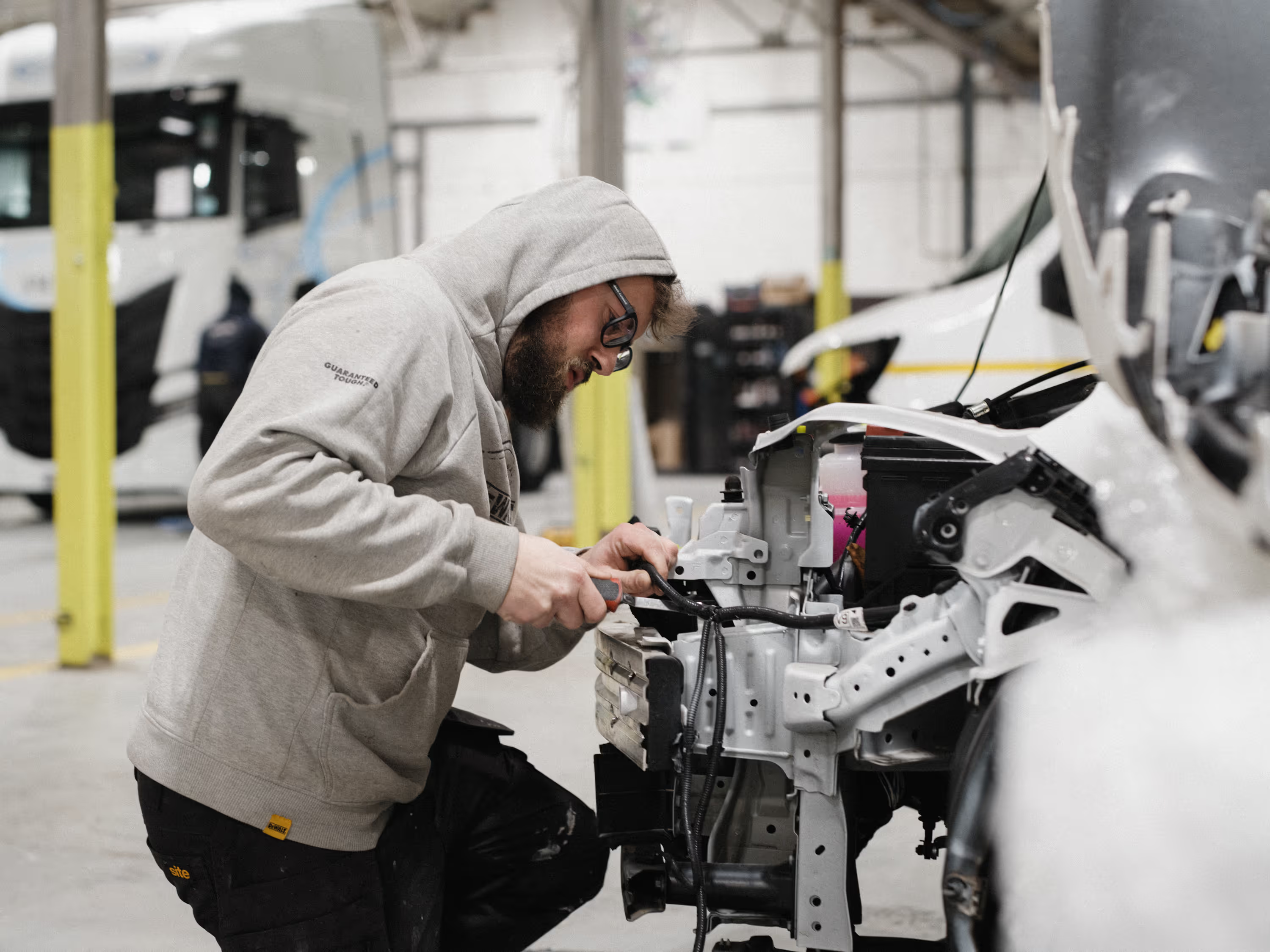
For small and medium-sized fleets in particular, working directly with a certified repairer can often deliver better cost control, faster turnaround and greater transparency.
This article analyses how fleet accident management works, what it really costs, and when direct repair may be the smarter choice.
How Fleet Accident Management Works
A fleet accident management (FAM) provider acts as an intermediary between:
- The fleet operator
- The fleet insurer
- Third-party insurers
- Repair networks
- Credit hire companies
In most cases, accident management firms offer to:
- Arrange vehicle recovery
- Handle repair authorisation
- Provide a replacement vehicle
- Manage claims correspondence
- Recover uninsured losses
Accident management services are typically marketed as free for fleet operators. However, accident management providers derive revenue from the structure of the claim, not by billing the fleet directly.
How Accident Management Firms Actually Make Money
1. Referral Fees and Commissions
UK regulators have identified a widespread referral-fee economy among accident management companies and insurers. The FCA found that accident management referral fees averaged £565 per claim in 2023, sometimes exceeding £1,000 per claim. These costs are embedded within the overall claim value and contribute to rising fleet premiums over time.
2. Credit Hire Mark-Ups
When a vehicle is off the road, many accident management firms provide a replacement vehicle under a credit hire agreement. This differs significantly from an insurer’s courtesy car model.
FCA data shows:
- Average credit hire durations increased from 19 to 25 days.
- Average daily hire rates rose from £67 to £75.
- Average credit hire costs under GTA (General Terms of Agreement) reached £1,901 per claim.
- Non-GTA claims averaged £2,537 per claim.
- One insurer reported that providing a courtesy vehicle costs closer to £37 per day, meaning the difference is substantial.
Longer repair durations also generate higher hire revenue, creating misaligned incentives.
3. Administrative Charges to Repairers
Vehicle manufacturers and repair industry bodies have raised concerns that accident management firms often charge repairers admin or referral fees for work allocation. This can reduce repairer margins, encourage volume-driven repairs and increase overall claim inflation.
What Accident Management Really Costs Fleets Over Time
Although these services may appear free, industry evidence shows that claims involving intermediaries often cost significantly more. An Aviva broker comparison found typical third-party claim outcomes:
Claim Handling Approach
Typical Total Cost:
Managed directly by insurer: £3,169
Managed by GTA accident management firm: £6,697
Managed by non-GTA accident management firm: £9,990
The takeaway here is that Accident Management Can Triple Claim Costs.
Industry data shows that involving an accident management intermediary can increase total claim costs from around £3,169 to nearly £10,000, largely due to credit hire inflation and extended claim duration. That difference ultimately affects future premiums and uninsured fleet operating costs.
Accident Management Is Most Costly in Non-Fault Claims
Accident management firms are especially active in non-fault accidents, where costs can be recovered from the third party. In these cases, credit hire and repair costs are often less tightly controlled, increasing the risk of claim inflation. In at-fault accidents, by contrast, the fleet’s own insurer typically manages the repair process more directly, with stricter cost oversight. This is why the “free” accident management model tends to generate the greatest hidden uplift in non-fault incidents.
Are Accident Management Firms Economically Sensible for SME Fleets?
Accident Frequency and Admin Workload
Benchmarking suggests fleets experience around 0.24 accidents per vehicle per year. That means:
- A 20-vehicle fleet averages around 5 accidents annually.
- A 100-vehicle fleet averages around 24 accidents annually.
Industry guidance suggests each incident requires roughly 5 hours of administrative handling. Most SME fleets can handle this workload internally.
Cost Comparison
If accident management adds an average uplift of £5,200 per claim – a midpoint between GTA and non-GTA uplift estimates:
- A 20-vehicle fleet (≈5 claims) could pay around £25,000 extra per year.
- A 100-vehicle fleet (≈24 claims) could pay around £124,000 extra per year.
By contrast, employing a part-time accident coordinator can cost approximately £4,600 to £9,300 annually, based on UK salary benchmarks. For fleets with fewer than 100 vehicles, direct coordination is usually more economical.
The Hidden Cost of the Middleman Model
Inflated Repair and Hire Costs
Investigations have found that non-fault claims are particularly vulnerable to inflation because third-party insurers pay the bills. Bodyshops report operating dual labour rates – lower capped insurer contract rates and higher uncapped non-fault claim rates – with hourly labour charges sometimes doubling. The FCA reported labour rates rising from £35 to £45 per hour between 2019 and 2023, increasing average labour cost per claim from £616 to £879. Accident management involvement often extends claim duration, increasing hire costs and complexity.

Quality and Safety Concerns
Network-controlled repair models can prioritise throughput and cost minimisation, occasionally at the expense of best-practice repair standards. Manufacturers, including Volvo and Fiat, have warned that non-genuine parts and repairing rather than replacing safety-critical panels can compromise vehicle integrity. Working directly with OEM-approved repairers improves transparency and compliance.
Duty of Care: Fleet Managers Have a Legal Responsibility
Cost is not the only consideration when outsourcing accident repairs. Fleet operators also have a legal and operational duty of care to ensure that vehicles returned to service are safe, compliant, and repaired to manufacturer standards.
Cash Flow Pressure on Repairers
Repairers working under accident management networks frequently experience delayed payments, low-capped labour rates and admin fee deductions. Industry bodies such as the National Body Repair Association have warned that repair sustainability is under threat unless rates reflect modern operating costs.
Direct Repair: The Alternative Many Fleets Overlook
For many fleets, working directly with a certified accident repair specialist offers operational and financial advantages.
Benefits of Direct-to-Repairer Accident Support
- Faster vehicle assessment and booking
- Reduced downtime and transport delays
- No credit hire incentive structure
- Direct communication with the workshop
- Repair quality accountability
- Greater control over repair location and timelines
By working directly, fleets retain control and visibility throughout the process.
Certified Repairers Can Offer Full Fleet Support
Independent bodyshops with the right credentials often provide OEM approvals, Thatcham or insurer-aligned standards, fleet repair programmes, courtesy vehicle options and claims liaison without credit hire inflation.
Repairers like WCC operate under this direct repair model, supporting fleets without the layered costs of accident management networks.
In-House Accident Coordination: A Practical SME Option
Instead of outsourcing, many SME fleets appoint an internal accident coordinator. For fleets of 20 to 100 vehicles, this often requires only 50 to 120 hours per year – roughly 1 to 2 working weeks annually. The benefits include choosing trusted repair partners, negotiating directly, tracking downtime accurately and retaining claims insight for driver risk reduction. Utility contractors and specialist fleets frequently use this approach because downtime is too costly to outsource inefficiently.
When Outsourcing Does Make Sense
Accident management firms may still be appropriate for large fleets (250+ vehicles), leasing companies with delegated authority, 24/7 FNOL environments and high-volume national operations requiring centralisation. Large-scale operations can justify using intermediaries. But for SME fleets, the cost uplift from claims frequently outweighs the convenience.
Conclusion: Direct Repair Often Delivers Better Value for SME Fleets
Accident management providers position themselves as free, but UK regulatory evidence shows they monetise claims through referral fees, inflated credit hire and extended claim durations. For fleets with 20 to 100 vehicles, direct repair and in-house coordination offer lower total cost, faster return to service, better repair transparency and stronger operational control. For SME fleets, the question is often not whether accident management is convenient, but whether the long-term cost inflation and loss of repair control are worth it. Working directly with an accredited repairer can eliminate the hidden inflation built into the middleman model.