The Missed Opportunity Sitting on Your Driveway
Why Van Wraps Are One of the Most Undervalued Brand Assets in Business
January 21, 2026
Share this article:


One side effect of becoming deeply familiar with a niche is that you start seeing it in everyday life.
I used to work in video production, and even now I can’t turn it off. My retired parents are obsessed with those daytime tv shows about buying property abroad, and all I can see is how infuriatingly bad the camera shake is. Seriously. The production quality is unacceptable for a moderately watched YouTube channel, yet there it is on broadcast TV.
Since entering the commercial vehicle industry, I have a new obsession: van watching.
I take note of every single van I see on the road. I’m overtaking vans on the M6, looking back to see what kind of half-wrap they’ve used to try and convey their brand values. I’ll be in the supermarket car park scanning for them, sometimes even taking photos of particularly good, or in most cases, comically bad examples to use as reference points.
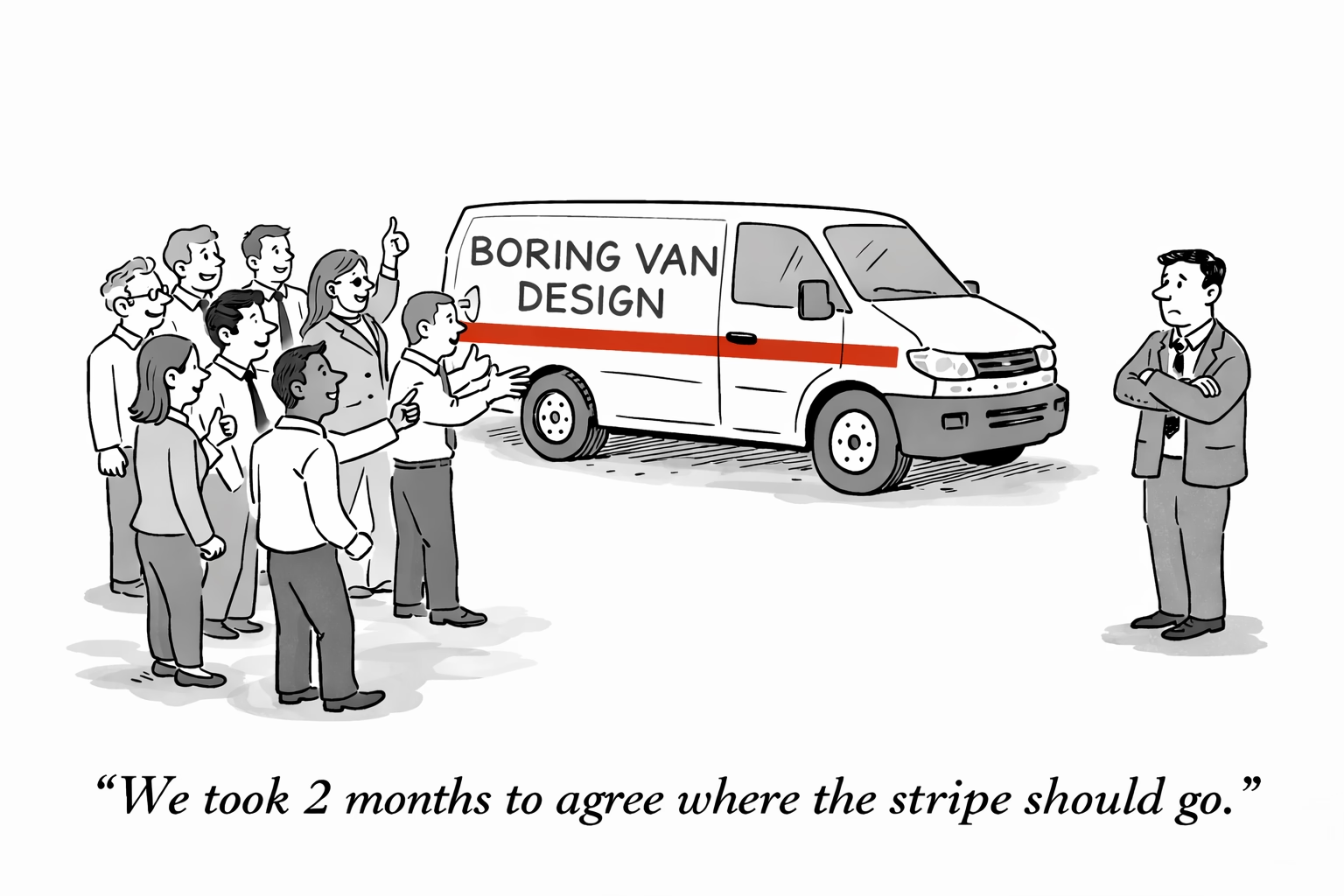
I can confidently say that 80–90% of the advertising I see on commercial vehicles is so boring and unoriginal that it begs the question: what was the point in having it done in the first place?
Most businesses spend an incredible amount of time agonising over where their marketing budget goes. They debate channels, scrutinise cost per lead, and argue over whether a font is “on brand”. What they rarely question is the one brand asset they already pay for, every single day, regardless of whether it actually works.
For many companies, vans and trucks are treated as pure utility. They are just boxes on wheels that move people or stock from A to B. Branding is usually an afterthought: a logo on the door, a phone number in small type, or sometimes nothing at all. That decision quietly wastes one of the most underused assets a business will ever own.
Better than a billboard: reaching the audience you’ve already paid for.
Let’s talk about sunk costs.
You pay for your fleet whether the vehicles generate attention or not. Insurance, fuel, servicing, drivers, downtime. None of that changes based on how the vehicle looks. What does change, however, is whether those unavoidable costs also buy you brand exposure.
To put that in context, a single static billboard in a city like Birmingham can easily cost several thousand pounds per month, with limited exposure. When the booking ends, the visibility stops. You pay again, or you disappear. This is fine if you are a major corporation with a budget for pure brand awareness. For a smaller business, it is a significant allocation of funds with no clear return.
A branded van seen thousands of times a week in traffic, at depots, and on residential streets operates on a completely different model. It delivers repeated exposure without time limits, renewal negotiations, or media schedules.
I often feel like I’m watching a lost episode of Succession when we present ideas to larger companies.
You see the bureaucratic machine start to grind. A boardroom full of people more concerned with internal optics and not “rocking the boat” than actually making an impact. By the time a fresh, bold idea has been passed through enough hands, it has been diluted into something “safe”. Companies default to subtle, neutral wraps because they feel professional.
White vans with restrained graphics feel low risk. They don’t offend. They don’t invite scrutiny from higher-ups. But in the real world, that version of “professional” is just a synonym for invisible. People don’t care because they're not looking. They haven't been given a reason to.
This is partly because of the environment in which these vehicles operate. The vast majority of vehicles on UK roads fall into a narrow band of colours: white, black, grey, blue, and red. Against that backdrop, delicate branding blends in by default. In the real world, attention is not evenly distributed. Vehicles that break that visual pattern, the ones that refuse to play the corporate “safe” game, are the ones that get remembered.
Everything else disappears within the background noise.
Loud isn't the same as Messy.
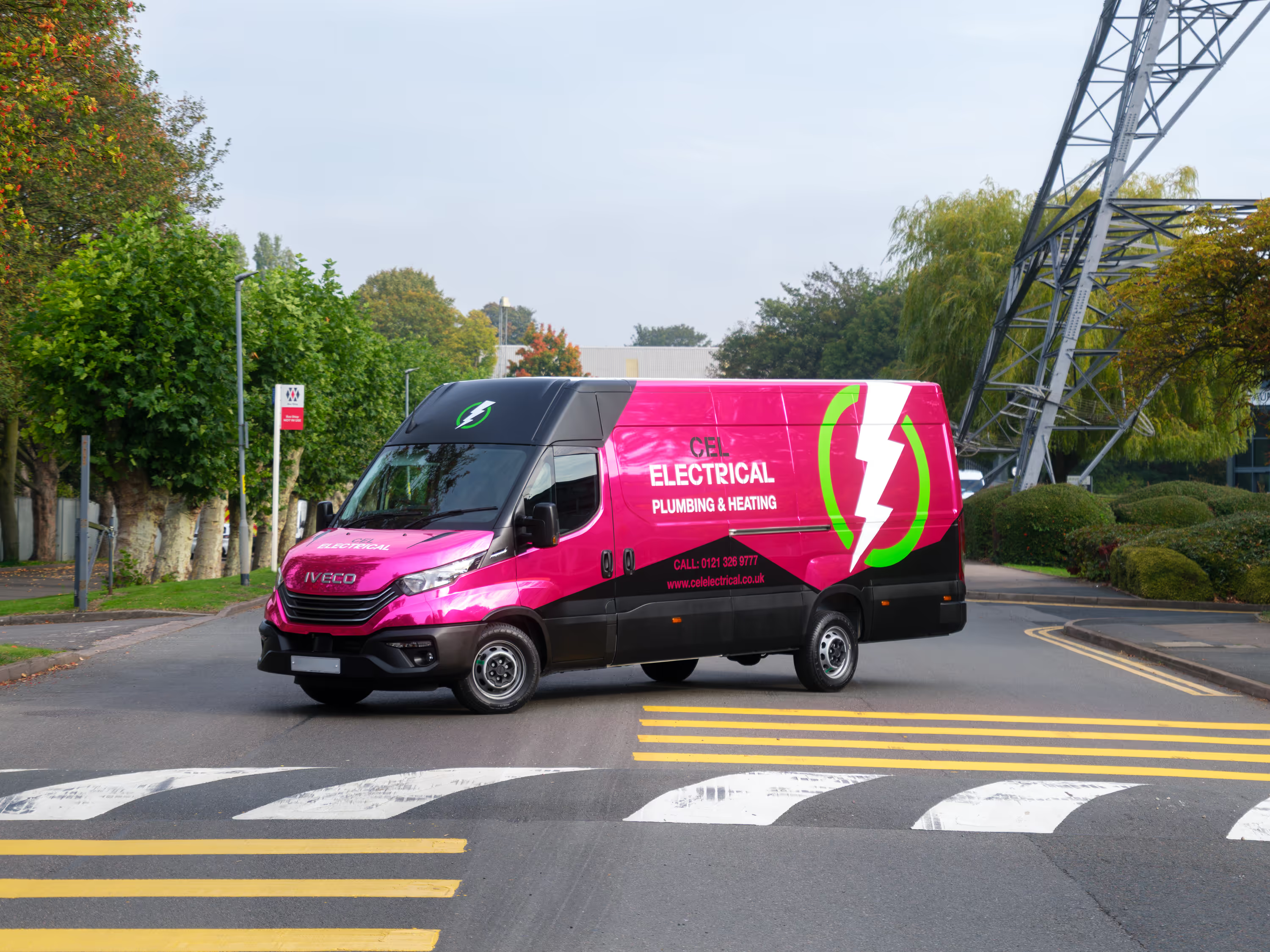
Bold colour works because it triggers a different psychological response than traditional advertising. People generally dislike being advertised to, but they are far more tolerant of a cool vehicle. It doesn’t feel like an invading advert. It feels like visual interest that breaks up the monotony of the road. However, the most effective wraps are not random. They are deliberate. They prioritise clarity over subtlety and recognition over restraint.
If your branding takes four seconds to understand, but the van passes the customer in two, you haven’t got a marketing asset. You’ve got an expensive paint job. You have to design for the environment, not the boardroom. A well-designed loud wrap communicates confidence. A quiet wrap that disappears communicates nothing.
Decision-makers and marketing teams worry about being judged. They worry about the branding feeling “too much” or someone in the office saying they don’t like it. So the safest option wins. What rarely gets measured is the cost of invisibility. A van that attracts attention might generate comments. A van that blends in generates nothing. No recall. No familiarity. No association when the buying decision eventually happens.
In most industries, customers do not choose the company they saw once. They choose the one they recognise. They trust brand familiarity. We see this consistently when businesses commit fully to a distinctive look. It isn’t just about attention. It’s about starting a conversation. Prospects recognise the brand before they even make contact. Teams feel a sense of pride driving something that looks intentional rather than generic.
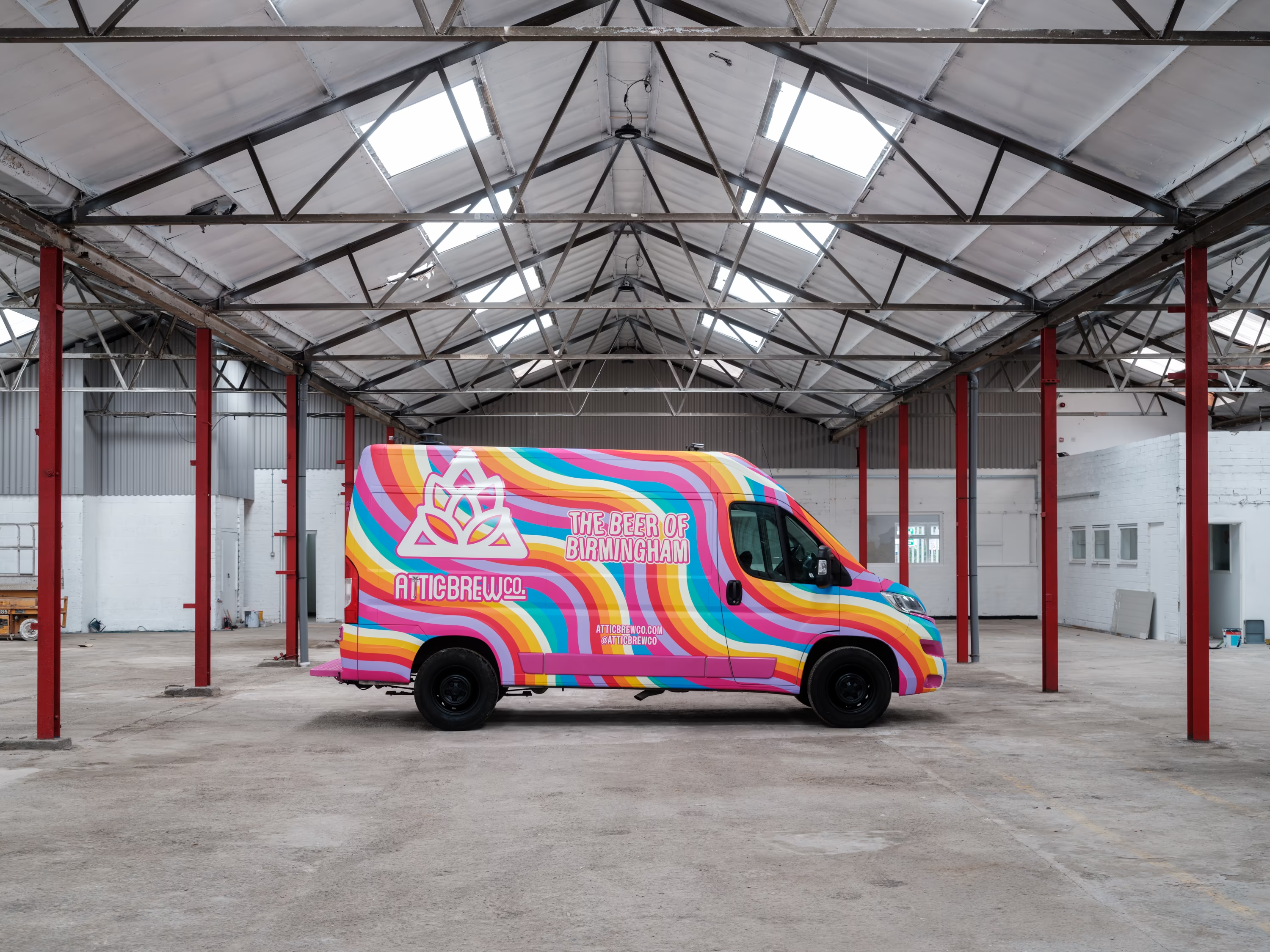
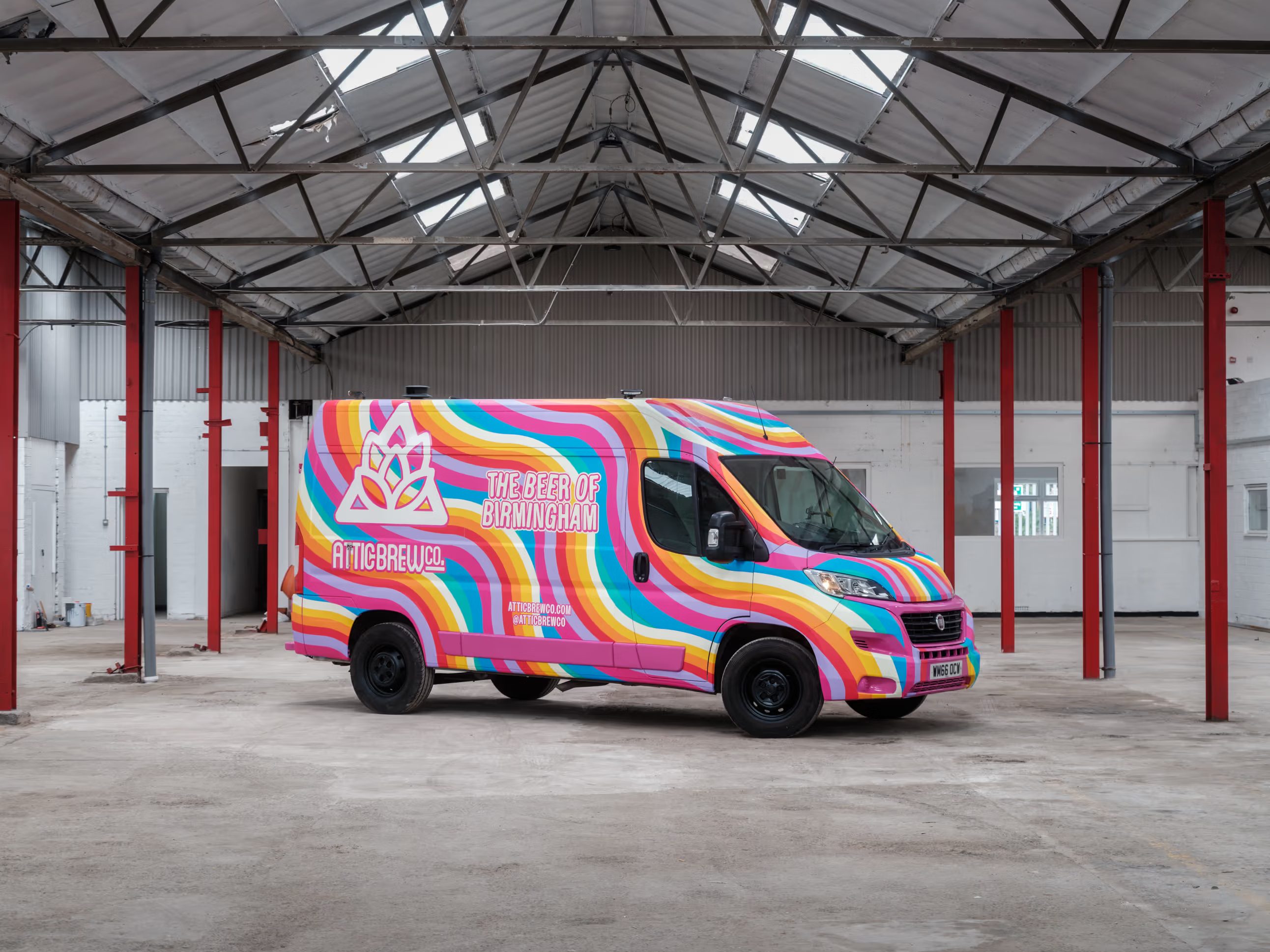
“The van gets mentioned everywhere. Customers recognise it instantly, and people regularly wave and comment on it when we’re out making deliveries. They take pictures of it and share them with friends.”
— Jo Brand, Attic Brew
The takeaway
If you’ve made it this far, you’ve probably realised that brand awareness isn’t created by one perfect, expensive impression.
Vehicles are uniquely positioned to win that battle because they are consistent. They appear in the same postcodes, on the same routes, in front of the same audiences, day after day. But for that repetition to actually stick, the branding has to be immediately recognisable. Loud wraps accelerate that recognition. Subtle ones, designed to satisfy a careful committee, delay it or prevent it entirely.
Next time you’re on the M6 or walking through a supermarket car park, try van watching for five minutes. Look at how many businesses have spent thousands of pounds just to blend in. Stop treating your graphics as decoration and start treating them as infrastructure. They are a long-term asset designed to turn unavoidable operational spend into regular exposure. Choosing between a van that blends in and one that stands out is not a matter of personal taste or what the directors like.
It is a matter of strategy.
- CEL Electrical – Custom Fleet Graphics
- Attic Brew – Branded Delivery Van
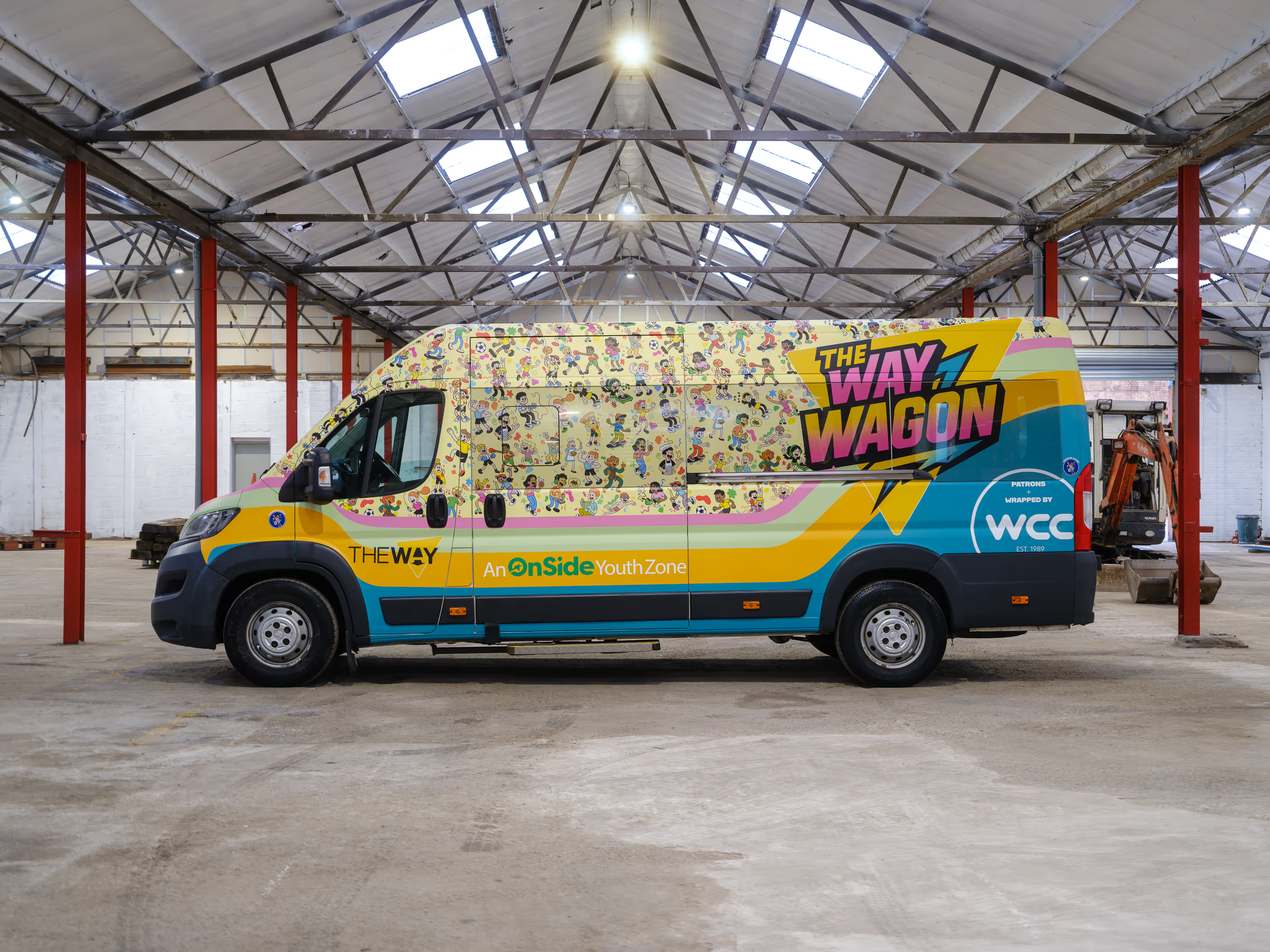
- The Way Youth Centre – Community Vehicle Wrap