Table of Contents


Introduction
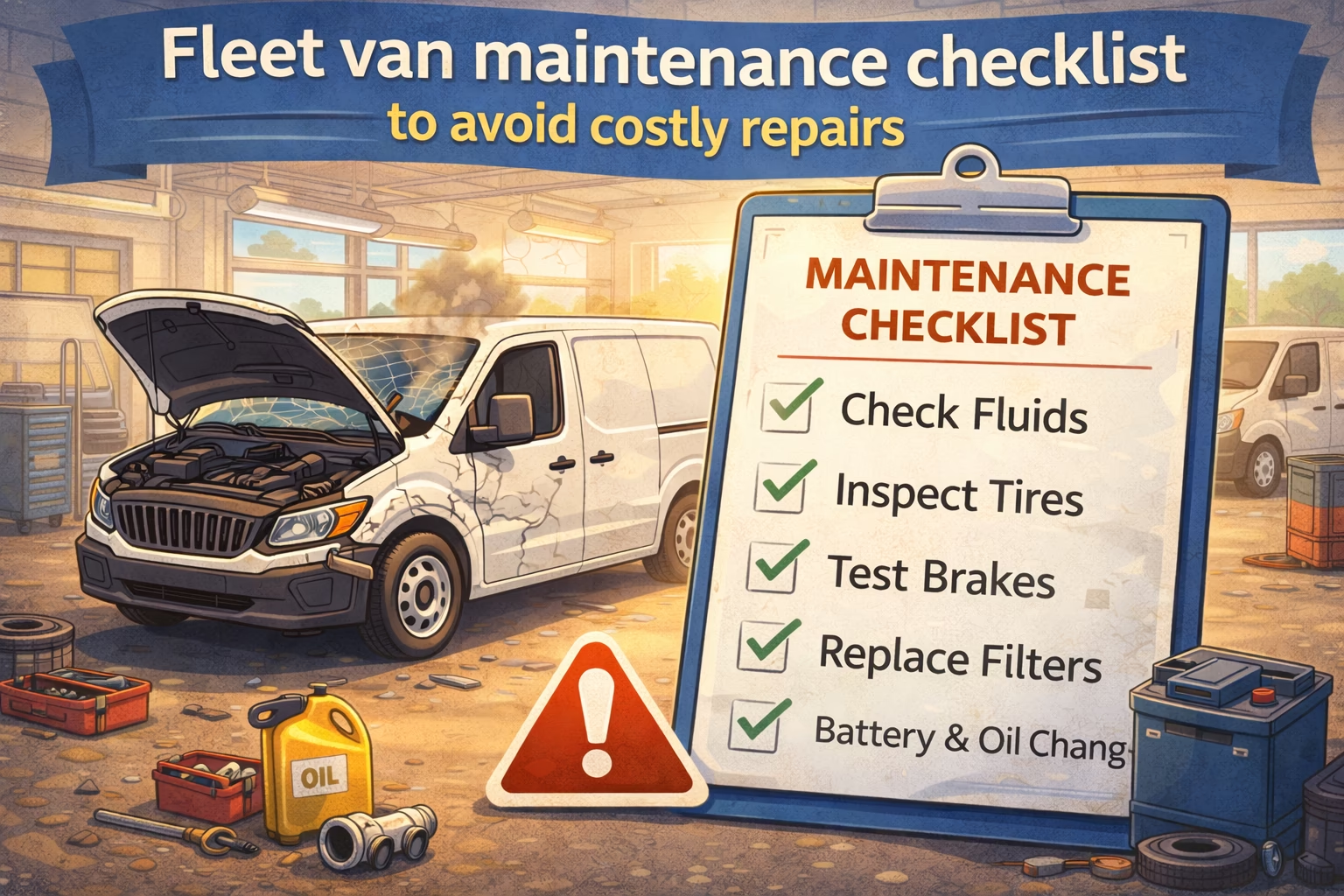
Maintaining a commercial van is not merely about passing an MOT. For fleet operators, maintenance is about keeping vehicles safe, legal, productive, and consistently available for work.
Unforeseen breakdowns create significant operational disruption through:
- Downtime and missed deliveries.
- Replacement vehicle hire
- Rising repair costs
- Safety risks and compliance exposure
This guide adapts Driver, and Vehicle Standards Agency (DVSA) roadworthiness principles into a practical checklist fleet operators can apply across daily checks, scheduled servicing, and long-term vehicle preservation. Each section below focuses on a key area for reducing repair costs and maximising van uptime.
For a full view of how downtime affects repair economics, see:
→ The true cost of repairing a damaged fleet van
Why prevention matters
Routine maintenance takes time and cost, but it is more economical than unexpected repairs or early replacements.
DVSA guidance makes clear that early signs of deterioration or damage allow operators to take remedial action before failure occurs and unscheduled downtime escalates.
Preventive maintenance also helps fleets:
- Preserve manufacturer warranties
- Avoid enforcement penalties
- Reduce long-term repair spend.
- Keep vehicles earning revenue.
Key takeaway: Small planned interventions prevent large unexpected breakdown costs.
Daily driver walk-around checks (DVSA requirement)
UK roadworthiness guidance expects every commercial vehicle in service to undergo a daily walk-around inspection before entering the road network. The walk-around inspection is a systematic check to confirm key safety and operational components are functioning properly.
Checks should be:
- Completed by the driver or the responsible person
- Recorded formally, including nil defect returns
- Retained for audit and compliance purposes
A daily check takes only minutes but can prevent serious failures.
Core daily walkaround checklist
Lights, indicators, horn, steering
- Confirm that headlights, brake lights, indicators, and marker lamps operate.
- Check the horn function
- Ensure steering has no abnormal play.
Windscreen, mirrors, wipers
- Windscreen free of major cracks or obstruction.
- Mirrors are secure and unobstructed
- Washer fluid topped up.
- Wipers in good condition
ADAS sensors and cameras (if fitted)
Many modern fleet vans include Advanced Driver Assistance System (ADAS) cameras and radar sensors.
Drivers should ensure:
- Sensors are not blocked by mud, ice, snow, or road film.
- Camera areas around windshields remain clean.
- Parking sensors are unobstructed.
Blocked sensors can affect driver-assistance safety and may be questioned during roadside inspections.
Seats, seatbelts, dashboard warnings
- Seats secure
- Seatbelts latch and retract properly.
- Investigate any warning lights (ABS, airbags, ESC) immediately.
Tyres and wheels
- Tread above the legal minimum.
- Tyres correctly inflated
- No cuts, bulges, exposed cord, or foreign objects
- Wheel nuts and trims secure
Unsafe tyres are a major enforcement and safety risk.
Bodywork, battery, load security
- Doors close properly
- No loose panels or unsafe fittings
- Battery is secure with no leaks
- Loads restrained correctly
- Tail lifts, or tow equipment, are functioning safely.
Fluids and leaks
Examine for visible leaks and verify basic levels:
- Engine oil
- Coolant
- Brake fluid
- Washer fluid
- AdBlue and fuel cap security
Reporting defects
Defects must be recorded immediately. Dangerous defects require the vehicle to be removed from service until repaired.
Strong defect reporting creates the audit trail that protects operators.
For repair governance standards, see: → Why fleet operators should insist on accredited Vehicle Damage Assessor (VDA) assessments
Weekly checks: deeper depot inspection
Weekly checks go beyond driver walk-arounds and should be carried out by a competent person.
Recommended weekly tasks include:
- Engine oil level and condition
- Battery security and terminal corrosion
- Drive belts for cracking or fraying.
- Safety equipment checks (where applicable)
- Tyres for uneven wear patterns or embedded debris
Deep inspections help catch wear before it becomes operational failure.
Tyres, brakes, and fluid management
These systems are critical for both safety measures and running cost efficiency.
Tyres
Fleet best practice includes:
- Weekly pressure checks with a reliable gauge
- Replacing tyres before wet-weather performance drops
- Inspecting for cuts, bulges, or structural damage
- Monitoring uneven wear as an alignment or suspension warning sign
Correct tyre maintenance improves grip, reduces fuel consumption, and prevents roadside failures.
Brakes
Drivers should report immediately:
- Spongy or delayed pedal feel
- Grinding noises
- Increased stopping distance
- Handbrake weakness
Planned brake servicing prevents more expensive secondary damage.
Brake performance documentation
Fleet operators should ensure braking performance is periodically tested, recorded, and retained as part of scheduled safety inspections. Braking performance documentation is required to demonstrate compliance with safety guidelines.
Clear brake records support DVSA compliance and reduce enforcement risk in audits or roadside stops.
Fluids
Monitor levels and condition of:
- Engine oil
- Coolant
- Brake fluid
- Power steering fluid
- Washer fluid
Brake fluid absorbs moisture over time, so periodic condition checks and scheduled replacement are as important as topping up levels.
Follow manufacturer schedules to prevent component failure.
Corrosion prevention and cleanliness
The UK climate creates an aggressive corrosion environment due to:
- Rain exposure
- Coastal salt
- Winter road treatments
Unchecked corrosion can lead to:
- Brake line failure
- Suspension mount weakness
- Structural MOT failures
- Expensive long-term repairs
Fleet corrosion prevention should include:
- Regular underbody washing
- Extra winter cleaning around arches and chassis rails
- Surface rust treatment before escalation
- Drain clearance to prevent trapped moisture.
- Professional underbody protection where appropriate
Key takeaway: Structural rust is a fleet lifecycle risk, not cosmetic damage.
Service scheduling and record-keeping
Scheduled safety inspections are the backbone of compliant fleet maintenance.
DVSA guidance suggests inspection frequency should depend on:
- Vehicle age
- Duty cycle and mileage
- Operating environment
- Terrain and load intensity
Many fleets operate inspections every 4 to 13 weeks.
Key practices include:
- Keeping service planners at least six months ahead
- Following the manufacturer's service intervals
- Retaining all records, including nil defect reports
- Tracking rising repair frequency as an end-of-life warning
For replacement thresholds, see:
→ [When should a commercial van be written off or scrapped?]
Fleet compliance, OCRS, and Earned Recognition.
Strong maintenance governance supports DVSA compliance outcomes, including:
- Improved OCRS (Operator Compliance Risk Score)
- Eligibility for DVSA Earned Recognition schemes
- Reduced risk of enforcement action, such as prohibition notices (known as PG9 notices) for serious defects
For fleet operators, maintenance records are not just operational. They are compliance protection.
Early fault intervention and maintenance economics
Catching faults early is always cheaper than reacting to failures.
Examples include:
- Replacing worn brake pads before disc damage occurs
- Addressing coolant loss before overheating escalates
- Rotating tyres to extend service life
- Treating corrosion before structural weakening develops
- Resolving warning lights before safety systems fail
Preventive work reduces downtime and keeps vans running.
Conclusion
A disciplined maintenance programme is essential for fleets striving to:
- Minimise breakdowns
- Protect drivers and duty-of-care compliance.
- Reduce repair spend
- Extend the vehicle's working life.
- Keep vans reliably earning revenue.
Daily checks catch defects; weekly and scheduled servicing keep key components within safe limits. Corrosion prevention maintains structural integrity.
Preventative maintenance lowers repair costs and ensures DVSA compliance.
For the full fleet decision framework, see:
→ Should you repair or replace your damaged fleet van?
Fleet support from WCC
WCC supports fleet operators with assessment-led repair and maintenance outcomes across: