Table of Contents


Introduction
Modern commercial vans are no longer simple vehicles of metal and glass. They are complex systems built around structures made from multiple materials, electric vehicle (EV) components that carry high-voltage electricity, and Advanced Driver-Aid Systems (ADAS), which are technologies that help drivers operate vehicles more safely.
After a collision, a quick visual estimate is no longer sufficient. For fleet operators, poor assessment creates real operational and legal risk.
An accredited Vehicle Damage Assessor (VDA) provides the evidence-led framework needed to protect driver safety, satisfy insurers, and ensure repairs comply with UK standards.
At WCC, accredited assessment underpins every return-to-road decision.
This article is part of WCC’s broader fleet decision framework. Before we dive deeper, consider the following related resource:
→ Should you repair or replace your damaged fleet van?
What does a Vehicle Damage Assessor actually do?
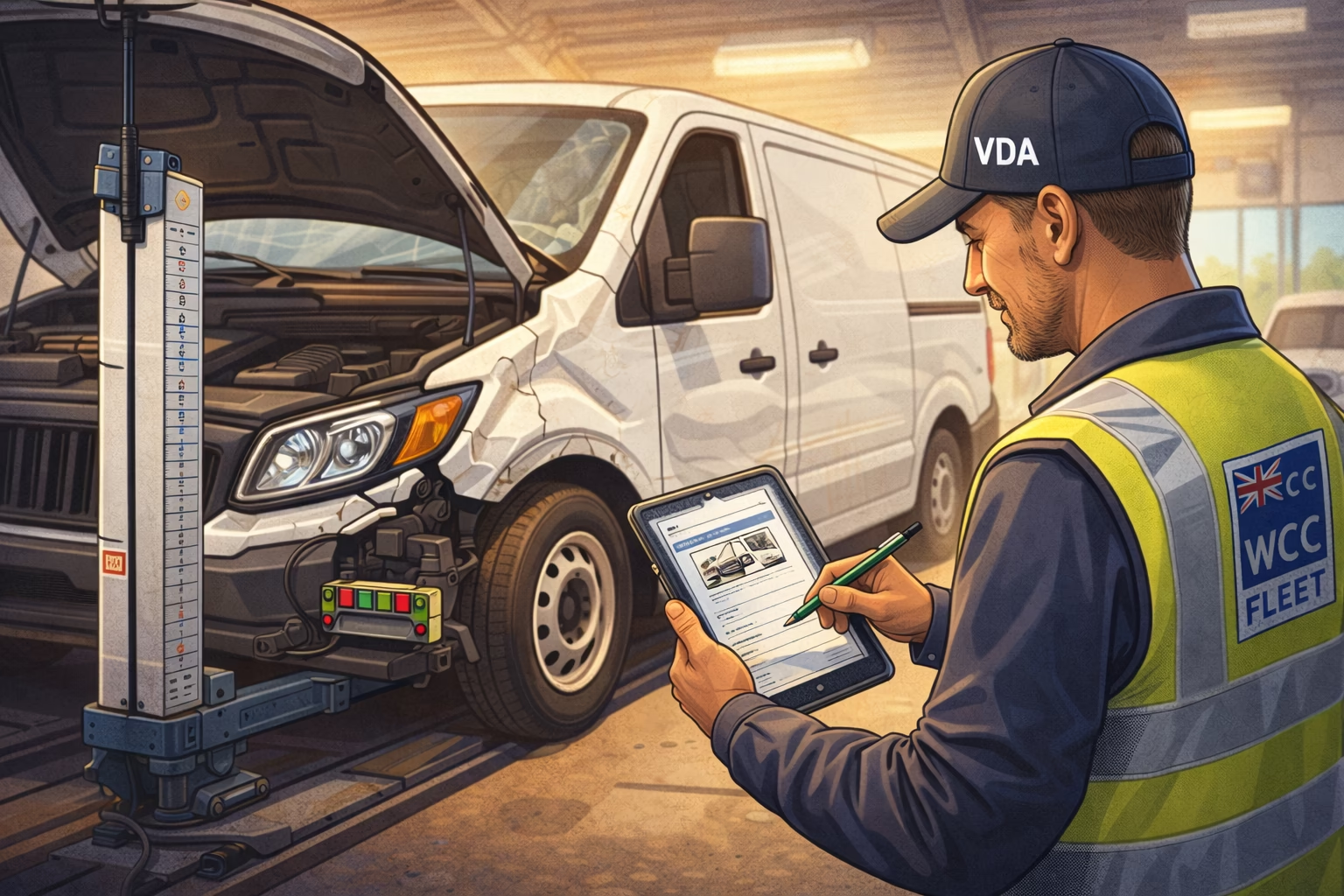
A VDA is the technical link between the damaged vehicle, the repair process, and the insurer or fleet decision-maker.
Under current UK occupational standards, a qualified VDA is expected to:
- Inspect damage methodically, including hidden or structural impact.
- Use manufacturer repair data to decide whether parts should be repaired or replaced.
- Understand modern commercial vehicles, including those powered by diesel fuel, hybrid (combining electric and traditional engines), and full electric vehicle (EV) fleets.
- Identify safety-critical systems affected by collision damage.
- Produce detailed repair specifications using professional estimating systems.
- Keep clear documentation which supports audit and dispute resolution.
A VDA’s role is not simply to price a repair. They ensure that repair decisions are technically correct, compliant, and defensible.
WCC’s accredited assessment standard
At WCC, every commercial vehicle repair begins with a structured assessment signed off by an IMI-qualified Vehicle Damage Assessor.
Our Vehicle Damage Assessor at WCC
Fleet repair decisions at WCC are overseen by Scott Beard, our accredited VDA.
Scott routinely signs off:
- Structural and safety-critical repairs
- ADAS-sensitive collision work
- Repair versus replacement assessments
- Compliance-focused return-to-road decisions
His participation guarantees fleet repairs are based on evidence, not guesswork or short-term cost pressure.
Structural signing-off and BS 10125 compliance
Heavy structural repairs—repairs to the main frame of a vehicle—are critical for safety. Accredited repairers are expected to follow standards set out in BS 10125, the UK specification that defines best practice for vehicle damage repair.
This framework calls for:
- Structural work to be verified by a competent, qualified person
- Repair stages to be documented with photographic evidence
- Records to be retained for at least three years
- Subcontracted processes to meet the same traceable standards
- Parts and repair methods to continue to be aligned with manufacturer guidance
Modern vans increasingly use advanced structural designs, including large aluminium or bonded (glued rather than welded) components that may not be safely repairable.
A qualified VDA ensures structural decisions are made correctly before a vehicle is returned to service.
ADAS calibration governance
Fleet vehicles are increasingly relying on ADAS systems, such as helping assist
- Emergency braking
- Adaptive cruise control
- Radar and camera-based detection
These systems depend on sensors located in bumpers, windscreens, mirrors, and headlights.
When repairs disturb these areas, calibration may be required.
Industry and insurer repair standards increasingly expect that:
- ADAS features are identified before repair begins
- Calibration needs are planned into the repair process.
- Recalibration is carried out by competent technicians.
- Written evidence of calibration is retained for audit purposes.
Key takeaway: If calibration is not documented, fleet operators have no defensible proof that the system was restored correctly. Always request written calibration records.
Insurer disputes and the ABI Salvage Code
Insurance outcomes often depend on whether a van is repaired or classified as a write-off.
UK salvage categories include:
- Category A and B (must be scrapped)
- Category S (structural but repairable)
- Category N (non-structural but repairable)
Under ABI (Association of British Insurers) guidance, salvage categorisation is expected to be carried out or verified by an Appropriately Qualified Person (AQP).
To clarify roles in this process, it’s important to distinguish VDA from AQP:
- A Vehicle Damage Assessor (VDA) produces the repair assessment, specification, and safety plan.
- An Appropriately Qualified Person (AQP) holds additional accreditation specifically for salvage classification decisions.
Engaging an accredited assessor strengthens a fleet operator’s position when challenging:
- Incorrect write-off categorisation
- Unfair insurer valuations
- Structural repair safety concerns
Duty of care and fleet compliance protection
Work vehicles are legally treated as workplaces. Fleet operators retain a duty of care to ensure vehicles are safe, roadworthy, and properly repaired.
In the event of a serious incident, repair standards, sign-off procedures, and documentation may be reviewed closely.
Using an accredited VDA assessment demonstrates due diligence by showing that repair decisions were made by competent professionals in accordance with recognised standards.
Trusted by major UK insurers
WCC is trusted by fleet operators and approved by leading insurers, including:
- Allianz
- Aviva
- AXA
- NFU Mutual
- Zurich
- And other major UK insurance networks
Our IMI-qualified (Institute of the Motor Industry) assessment process assures estimates are accurate, repair plans are defensible, and avoidable delays or disputes are reduced.
Commercial repair services supported by an accredited assessment
WCC provides assessment-led repair solutions across the full fleet spectrum, including:
Every service is delivered under accredited VDA oversight, ensuring repairs are insurer-aligned and compliant with return-to-operation requirements.
Conclusion
Modern collision repair is no longer just cosmetic restoration. It requires:
- Structural strength governance
- ADAS calibration control
- Competent sign-off
- Rigorous audit-ready documentation
- Accurate insurer-aligned assessment
Accredited Vehicle Damage Assessors sit at the centre of this process.
At WCC, repairs are assessed and signed off by Scott Beard, our IMI-qualified Vehicle Damage Assessor, guaranteeing every return-to-road decision is evidence-led and compliant.
Insist on accredited VDA assessment to ensure uptime, protect liability, and control costs - make it your non-negotiable standard.